Lifestyle vs Studio Product Photos: Which One Actually Converts?
Lifestyle photos build desire. Studio photos build trust. Both matter, but the balance between them is different for every product, platform, and price point. Here's how to get it right.
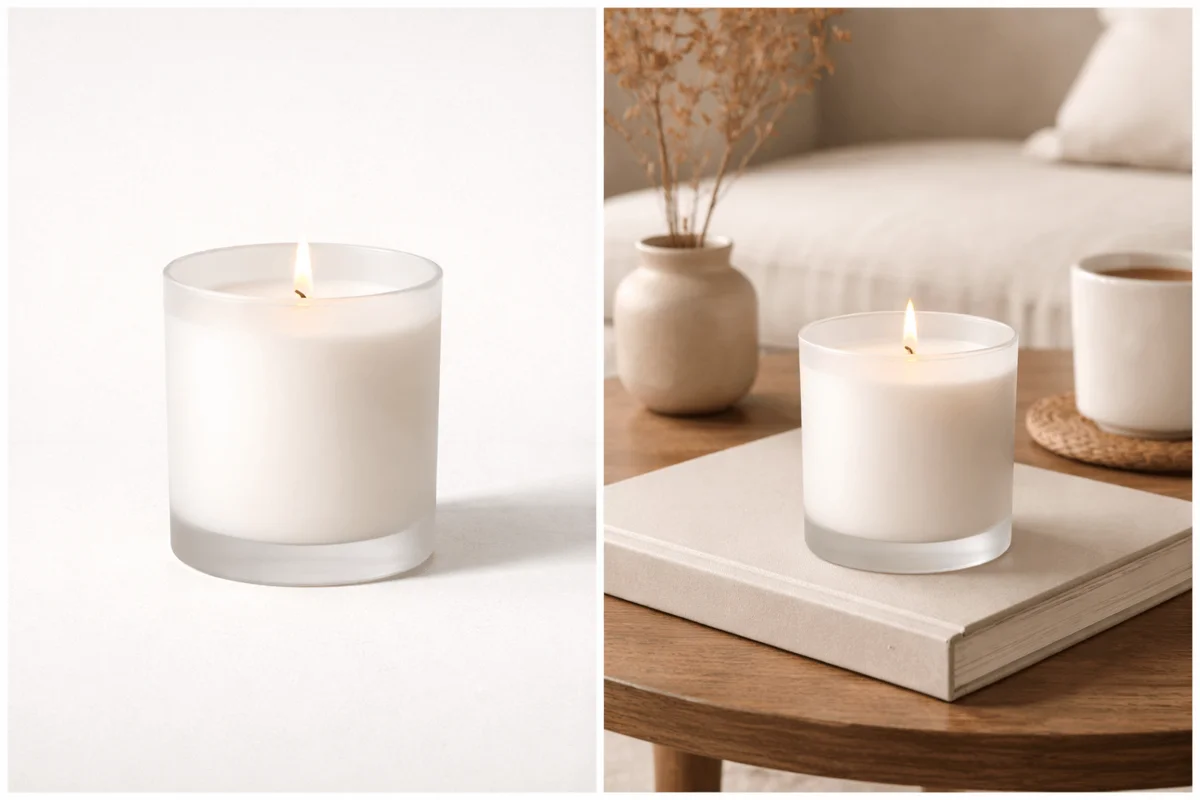
The lifestyle vs studio debate gets framed as a style question. It isn't. It's a conversion question, and the answer is different depending on what you're selling, where you're selling it, and what's standing between your buyer and a purchase.
Studio images answer the question: what is this? Lifestyle images answer the question: is this for me? Both questions exist in every buying decision. The one that needs answering first depends on the product.
Most brands get this wrong in the same direction: they default to studio shots because they're easier to produce, and treat lifestyle images as an upgrade rather than a requirement.
What each image type actually communicates
Studio images, clean background, controlled lighting, product as the sole subject, communicate clarity, reliability, and professional presentation. They make comparison easy. They work without any imagination on the buyer's part. They're the visual equivalent of a spec sheet.
Lifestyle images communicate context, emotion, and aspiration. They show the product in a world the buyer wants to inhabit. They answer not just what the product is but what it means to own it. They require the buyer to see themselves in the image, which is a more powerful conversion mechanism than clarity alone.
The brands that convert best at premium price points invest more in lifestyle images than studio shots. At premium prices, buyers aren't buying a product. They're buying an identity, and lifestyle images sell identity in a way studio shots never can.
When studio photos convert better
Studio images lead when the primary buying question is about the product itself, its specs, dimensions, build quality, or label. This is especially true for commodity-adjacent products where buyers are comparing multiple options side by side and clarity is the deciding factor.
- Tech accessories: buyers need to assess ports, finish quality, and size accurately
- Supplements and health products: label legibility and branding establish credibility
- Marketplace listings where white-background hero images are required or expected
- Ads targeting bottom-of-funnel buyers who already know what they want and are evaluating options
💡 Pro tip
On Amazon, your hero image is always a studio shot, policy requires it. But secondary slots are where conversion happens. A clean studio hero plus two well-executed lifestyle images in slots 2 and 3 consistently outperforms a studio-only listing at the same quality level.
When lifestyle photos convert better
Lifestyle images lead when the product's value is experiential rather than functional, when what the buyer is really purchasing is a feeling, a context, or an identity. This is most common in home, food, beauty, and wellness categories.
The mechanism is straightforward: a candle on a white background tells you it's a candle. A candle on a marble ledge with soft afternoon light and the suggestion of a bath in the background tells you what having this candle feels like. The second image does more selling with less copy.
- Home decor and candles: atmosphere is the product
- Skincare and beauty: aspiration drives the decision more than ingredient lists
- Food and beverage: appetite appeal requires context and warmth
- Fitness equipment: showing the product in use answers 'will this work for someone like me?'
💡 Pro tip
The best lifestyle images aren't heavily staged, they look like they could be a real moment from a real person's life. Over-produced scenes with too many props or too much styling read as stock photography, which undermines the authenticity that makes lifestyle images effective.
The real cost of getting the balance wrong
Brands that run studio-only catalogs leave conversion on the table on every platform where desire-building matters, Instagram, Pinterest, their own DTC store. Brands that run lifestyle-only catalogs leave conversion on the table on every marketplace where clarity and comparison are the primary mode.
The practical challenge is cost. A complete image set, studio hero, lifestyle, detail, angle, used to mean multiple shoot sessions or a single expensive one. That constraint pushed most brands toward whichever image type was easier to produce consistently, regardless of what actually converted.
AI-generated lifestyle images have changed this constraint meaningfully. A clean studio shot can be used as the source for generated lifestyle scenes that place the product in appropriate contexts, kitchen counter, bathroom shelf, desk setup, without scheduling a location shoot. The result is a complete image set produced from a single source photo.
The mix that performs across most product types
For most ecommerce products, a set of four images covers the full conversion arc: one studio hero for clarity and marketplace compliance, one additional angle or detail shot for depth, one lifestyle image for desire and context, and one benefit or use-case image that closes the gap between the product and the buyer's specific problem.
The order matters on most platforms: studio hero first (gets the click), lifestyle second (builds desire), detail or angle third (confirms quality), benefit last (closes the sale). This sequence follows the buyer's natural decision process rather than working against it.
Common questions about marketing
Keep reading
February 18, 2026
How Many Product Images Do You Actually Need to Convert?
More images isn't always better. The right number depends on your product, your price point, and the questions buyers are actually asking. Here's how to figure it out.
Read guide
April 21, 2026
Hero Shots That Boost Customer Engagement (And Why Most Don't)
The hero shot is the single image that decides whether a buyer stays on the page or scrolls away. Here's what separates hero shots that pull buyers in from the ones they skip past without registering.
Read guide