How Many Product Images Do You Actually Need to Convert?
More images isn't always better. The right number depends on your product, your price point, and the questions buyers are actually asking. Here's how to figure it out.
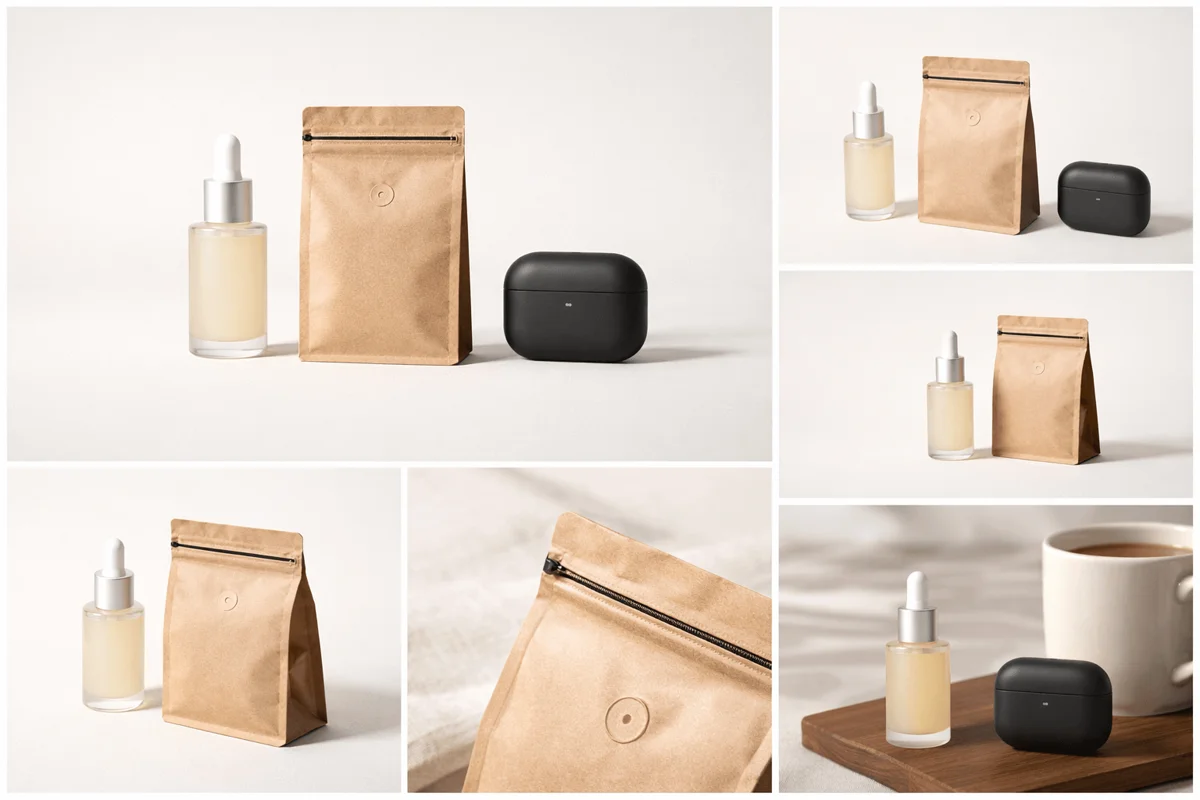
There's a persistent belief in ecommerce that more product images always help. Add another angle, throw in a lifestyle shot, upload a scale reference, the more the better. It's not true.
Repetitive images don't answer buyer questions. They just add visual noise that buyers scroll past on their way to the reviews section. The number of images that converts isn't the most you can produce, it's the minimum that eliminates doubt.
That number depends on the product, the price point, and what's creating friction in the buying decision.
The minimum that works for most products
For most ecommerce products, candles, skincare, accessories, home goods, five images is the functional minimum for a well-converting listing. Not five arbitrary images. Five specific ones that each answer a different question.
- Hero image on a clean background: what does this product look like?
- Second angle or side view: what's the shape and scale?
- Detail or close-up shot: what's the texture, finish, or label?
- Lifestyle image: where does this belong in my life?
- Benefit or use-case image: why does this matter?
Each image in a well-built set answers a specific question. If you can't identify what question an image answers, it doesn't belong in the set.
💡 Pro tip
Before adding a new image, ask: what doubt does this remove? If the answer is 'none' or 'I already have an image for that,' skip it. Redundant images dilute the images that are actually doing work.
When you need more images
Higher price points require more images, not because buyers like looking at more pictures, but because their doubt threshold is higher. A $200 product needs to overcome more skepticism than a $20 one. More images is how you do that without discount.
Complex products also need more coverage. A multi-function kitchen appliance has multiple use cases, multiple parts, and multiple questions a buyer needs answered before they commit. A simple candle doesn't.
- Products with multiple components or configurations: show each state
- Apparel: fit, fabric texture, and scale are each a separate question
- Tech items: ports, dimensions, and scale references reduce return rates
- High-ticket items: additional lifestyle shots build desire and justify price
If your return rate is above 10% for a specific product, images are usually the problem. Returns are what happen when the product looks different than what the buyer expected, which is an image failure, not a product failure.
The real cost of underinvesting in images
Most brands understand that bad images hurt conversion. Fewer understand the second-order effect: underinvesting in images across a growing catalog means every new product you launch starts with a conversion disadvantage.
A brand that launches 10 products per year and shoots each one with a rushed 2-image set is building a catalog of listing pages that leave money on the table. The cost compounds quietly, there's no single failed launch to blame, just a steady baseline conversion rate that's lower than it should be.
The practical fix: define the minimum image set for each product category before launch, and treat image production as part of the launch checklist rather than an afterthought. AI-generated lifestyle and contextual images make this practical even at high launch volume, you're no longer constrained by scheduling and shoot costs.
💡 Pro tip
Run a catalog audit once per quarter. Find your 5 highest-traffic, lowest-converting products. In most cases, the image set is the reason. Add a missing angle, a lifestyle image, or a detail shot, and measure the lift before running any paid traffic to those pages.
Platform-specific image count guidance
The right image count also depends on where you're selling. Each platform has different norms and different buyer behavior.
- Amazon: 7–9 images is the standard; secondary slots (lifestyle, infographic) drive significant conversion lift over hero-only listings
- Shopify: 5–7 images is typical; hero image quality matters most since buyers scroll less on DTC than on marketplaces
- Instagram Shopping: 3–5 images; the first image drives the tap, the rest close the decision
- Pinterest: 1–2 images per pin; make the first image earn attention in a feed
Common questions about marketing
Keep reading
March 25, 2026
What Makes a Product Image Actually Convert (And What Doesn't)
Most product images tell buyers what a product looks like. The best ones tell buyers what their life looks like with the product in it. Here's the difference, and how to close it.
Read guide
February 26, 2026
Lifestyle vs Studio Product Photos: Which One Actually Converts?
Lifestyle photos build desire. Studio photos build trust. Both matter, but the balance between them is different for every product, platform, and price point. Here's how to get it right.
Read guide