Product Photography Mistakes That Kill Sales (And How to Fix Them)
Most product photos don't fail because they look bad. They fail because they break trust in ways sellers don't notice until conversion data makes it obvious.
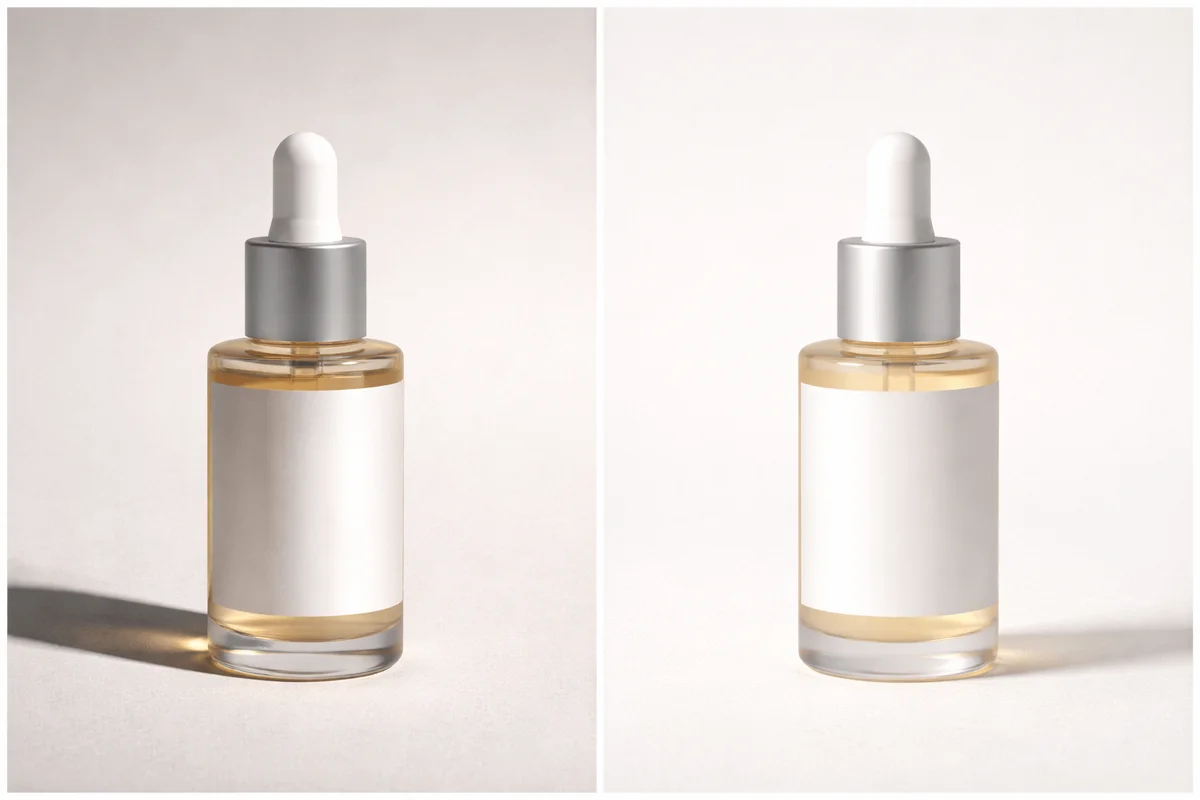
Most product photo mistakes aren't obvious. Sellers see their own products every day, they know what they look like, what they're made of, how they feel. Buyers don't. They're making a trust decision in under five seconds based entirely on what they see.
The mistakes that kill conversions are rarely the ones that look bad to a trained eye. They're the ones that create doubt in a buyer who is already skeptical, already comparing alternatives, and already looking for a reason not to commit.
Here are the most common trust-breaking mistakes, and what to do about each one.
Low contrast: the product disappears
A white bottle on a white background. A dark product on a dark surface. Both look like they belong on a page that wasn't finished. If the product edges aren't clearly defined, the product doesn't read as a real, purchasable object.
The fix isn't always a different background. Sometimes it's a subtle drop shadow, a slightly warmer surface, or a thin outline added in post. The goal is edge definition, the buyer should be able to trace the product's shape in under a second.
💡 Pro tip
Do a thumbnail test: shrink your hero image to 100×100px and look at it. If the product shape is clear, your contrast is sufficient. If it dissolves into the background, buyers scrolling a catalog grid will miss it entirely.
Harsh shadows that signal amateur photography
Hard, directional shadows, the kind produced by a phone flash or a single bare bulb, are the fastest way to make a product look cheap. Buyers may not consciously identify the light source, but they immediately register the output as low-quality.
The fix is always the same: make the light source larger. A window with a sheer curtain, a large softbox, or even bouncing a flash off a white ceiling all produce softer, more diffuse light. A single white card opposite the light source fills the shadow side without requiring a second light.
Harsh shadows cost you more than they should, because they're fixable without any new equipment. A $5 sheet of white foam board and a repositioned window solves 80% of shadow problems.
Inconsistent angles across the catalog
This is the mistake that's easiest to miss and hardest to undo. When a buyer clicks from one product to another and sees a different camera height, a different distance, a different perspective, the catalog stops feeling like a brand and starts feeling like a collection of individual items from different sources.
Brand trust is cumulative. Every inconsistency chips away at it. A shopper browsing 10 products shot from 10 slightly different angles has a subtly worse impression of the brand than one browsing 10 products with a uniform look, even if they couldn't tell you why.
💡 Pro tip
Mark your tripod position on the floor with tape. Mark the product placement on your shooting surface. These two marks let anyone on your team reproduce the exact angle for every new product, no guesswork, no drift over time.
Overloaded lifestyle scenes where the product gets lost
Lifestyle images exist to answer one question: where does this product belong in the buyer's life? Too many props, too busy a background, or too much visual competition and the image stops answering that question, it starts raising a different one: what am I actually looking at?
Every element in a lifestyle image should either support the product or belong to the environment. Props that compete with the product for the viewer's attention are props that should be removed. The product should be the first thing the eye lands on, and the scene should make that feel natural.
💡 Pro tip
Before finalizing a lifestyle shot, cover the product with your thumb and ask: is the background interesting enough to look at on its own? If yes, it's too prominent. The background should feel incomplete without the product, not complete with it.
Wrong color rendering, the trust killer buyers feel but can't name
Color accuracy is most critical in apparel, cosmetics, and food, categories where buyers are making decisions partly based on hue. A blush that photographs as coral, a navy that renders as black, a food product that looks grayer than it tastes, these generate returns and negative reviews that blame the product when the real problem was the photograph.
The most common cause is mixed light sources: daylight from a window combined with a warm overhead bulb in the same shot. The camera averages them in ways that shift every color. The fix is to use one light source at a time, turn off everything else, and set white balance manually or with a grey card rather than relying on auto.
- Shoot with one light source only, turn off all ambient room lighting
- Set white balance manually using a grey card or a known-neutral white surface
- Check color accuracy against the physical product under normal room lighting before uploading
- For critical categories (cosmetics, apparel), include a color-accurate swatch image in the listing
Low resolution on high-traffic pages
Pixelation on zoom is disproportionately damaging for higher-priced products. A buyer considering a $150 purchase who zooms in and sees compression artifacts has their doubt validated, if the seller can't present the product at full quality, maybe the product itself isn't worth the price.
The minimum for any ecommerce product image is 1000×1000px for square crops, or 1200px on the longest side for other ratios. For products that benefit from zoom (jewelry, textiles, skincare with detailed packaging), 2000px minimum is the practical standard.
Common questions about photography
Keep reading

April 21, 2026
Hero Shots That Boost Customer Engagement (And Why Most Don't)
The hero shot is the single image that decides whether a buyer stays on the page or scrolls away. Here's what separates hero shots that pull buyers in from the ones they skip past without registering.
Read guide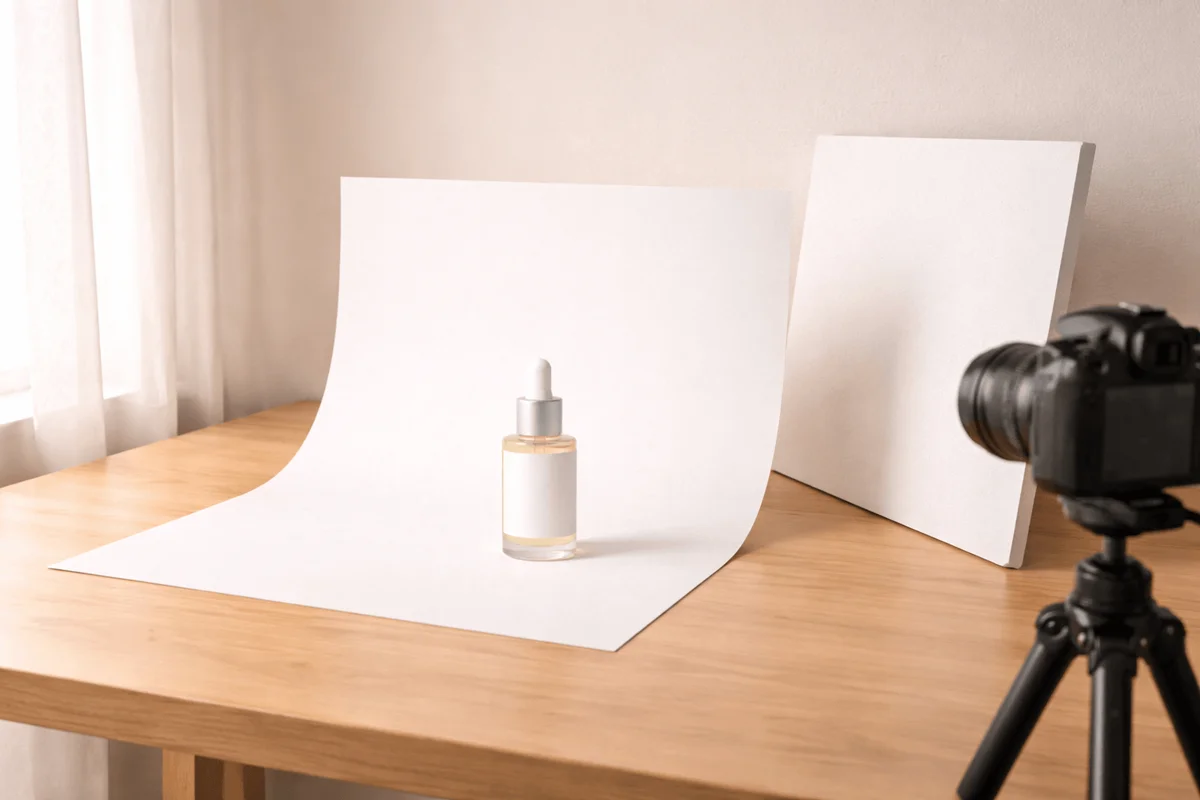
March 10, 2026
How to Build a DIY Product Photography Setup at Home
A home photography setup that produces consistent, catalog-quality images doesn't require expensive gear. It requires a repeatable system. Here's how to build one.
Read guide