Best Lighting for Product Photos by Product Type
Lighting isn't one-size-fits-all. The setup that makes skincare look premium will make tech accessories look flat. Here's how to light each product category correctly.
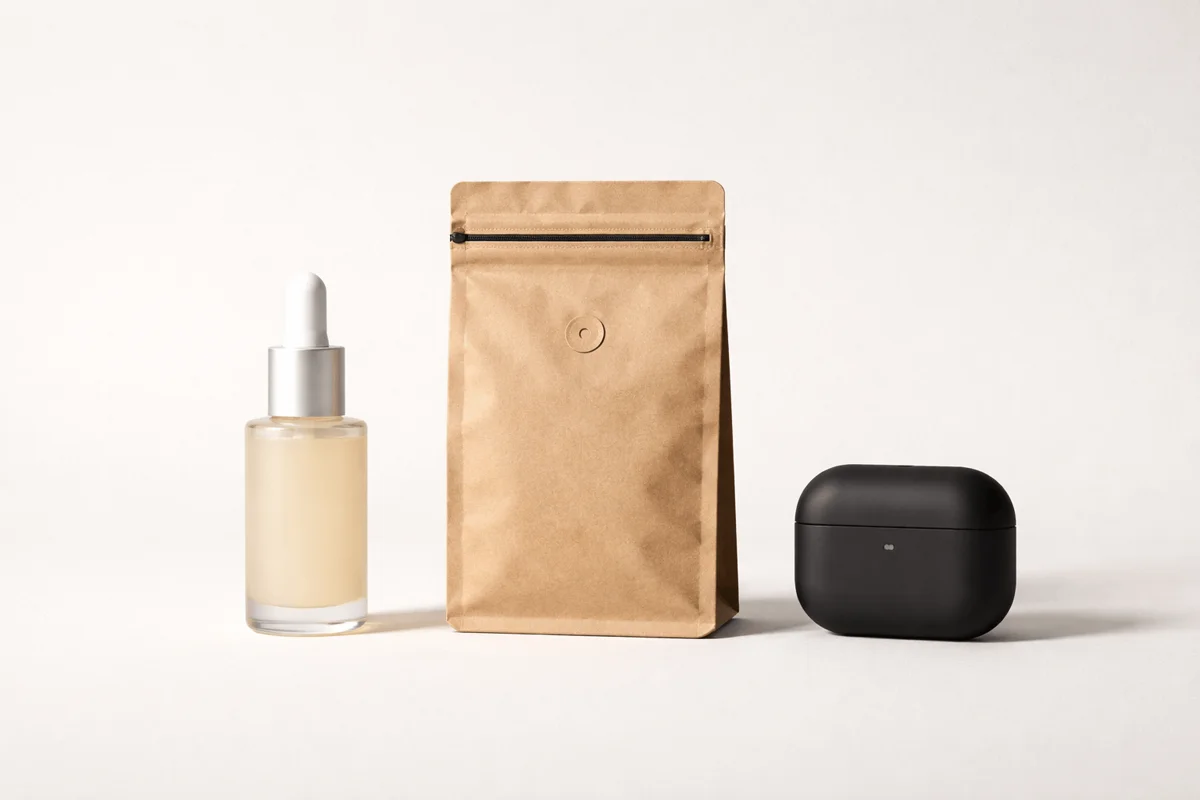
Lighting is the single variable that separates a product photo that looks premium from one that looks like it was taken in a garage. The problem is that most guides treat it as a single technique, soften the light, add a reflector, done. The reality is more specific than that.
The lighting setup that works perfectly for a glass perfume bottle will flatten a matte skincare tube. The warmth that makes a coffee bag look appetizing will make a phone case look dingy. Lighting decisions are product-specific, and getting them wrong costs conversions.
Here's how to light each major product category correctly, and why it matters for what buyers actually see.
The fundamentals that apply to every product
Before category-specific setups, two principles apply universally: light source size determines shadow softness, and light source position determines product shape.
- Larger light sources (windows, softboxes) produce softer, more flattering shadows
- Side lighting reveals texture and depth, front lighting flattens it
- A white reflector card opposite the key light fills shadows without a second light source
- Never mix color temperatures: daylight and warm indoor bulbs in the same shot create color casts that are nearly impossible to correct
💡 Pro tip
Before adjusting any lighting, eliminate all ambient room light. Turn off overhead and room lights and shoot with only your controlled source. Mixed ambient light is the most common cause of muddy, hard-to-fix color casts.
Skincare and beauty
Skincare sells on two things: surface quality and label legibility. The product needs to look clean, precise, and premium, which means eliminating glare on labels and hot spots on packaging.
The right setup: a diffused key light at 45 degrees to one side, a white card on the opposite side to lift shadows, and a neutral background that doesn't compete with the product's color. The light should be large enough to wrap slightly around the product, a softbox at 60cm or larger, or a window with a sheer curtain, works well.
- Avoid direct overhead light, it creates harsh hotspots on curved labels
- Keep white balance neutral to cool (5000–5500K) for a clean, clinical feel
- Test the label legibility at the final image size, if text is blurred by glare, tilt the product 5–10 degrees
💡 Pro tip
For glass or transparent skincare packaging, use a slightly darker background than usual. The contrast makes the product edges crisper and the glass read as premium rather than generic.
Food and beverage
Food photography is about appetite appeal, which means warmth, texture, and the suggestion of freshness. The same cool, even light that works for skincare makes food look unappealing and processed.
The right setup: a warm-toned key light (5000K or slightly below) from the side or slightly behind the product, positioned to graze across the surface and emphasize texture. This is called 'raking light' and it's what makes a coffee bag look like it contains something worth drinking.
- Side or back-angle lighting reveals packaging texture and depth
- Avoid front lighting, it flattens everything and makes food products look two-dimensional
- For glossy packaging, tilt the product slightly so label reflections fall away from the camera
💡 Pro tip
If you're shooting beverages in clear packaging, backlight the product slightly. The light coming through the liquid creates depth and vibrancy that front lighting can't replicate.
Tech and accessories
Tech products need crisp edges, controlled reflections, and a sense of precision. Soft, warm lighting that works for lifestyle products reads as imprecise here, tech buyers want to see the product clearly and assess its quality at a glance.
The right setup: a large diffused top light (60–90cm softbox directly above) as the primary source, with a subtle rim light behind and to one side to define the product outline and separate it from the background. Keep white balance cool (5500–6000K).
For matte or rubber-finished tech products, you can increase light intensity more than you'd expect. These surfaces absorb light rather than reflecting it, and more light means more visible texture and detail.
Glass and reflective products
Glass is the hardest product category to light correctly, and the most unforgiving of mistakes. The product is essentially a mirror, and it will reflect everything in its environment. The goal is to control what it reflects.
The right setup: large diffusers on both sides creating soft, graduated highlights. Keep the background and surrounding environment simple and neutral. Black cards placed near the product shape the reflections and create clean, defined edges, this is the technique used for luxury perfume and spirits photography.
- Use a white or light grey background, dark backgrounds make reflections harder to control
- Large diffusers produce symmetrical highlights that read as premium
- Black cards near the product edges create clean separation lines
- Keep the camera lens clean, any dust or smudge will appear in glass reflections
💡 Pro tip
Shoot glass products in a room with no windows behind the camera. Windows reflect as distracting rectangles of light in the product surface. Use controlled artificial sources so you know exactly what the glass is reflecting.
Home decor and lifestyle products
Home decor products are sold on atmosphere as much as the object itself. The lighting needs to convey warmth, comfort, and context, not just accurately describe the product.
The right setup: soft, directional natural light from one side (or a large softbox mimicking it), with a gentle fill on the opposite side. Warm tones (4500–5000K) work better here than the clinical cool tones used for tech and skincare. The shadows should be visible but soft, they add depth and make the product look like it's in a real environment.
This is also the category where AI-generated scenes have the highest impact. A candle or home accessory shown in a contextually appropriate room, soft morning light, appropriate surfaces, the right props, produces a more effective image than the same product on a sweep, regardless of how well the sweep is lit.
Common questions about photography
Keep reading
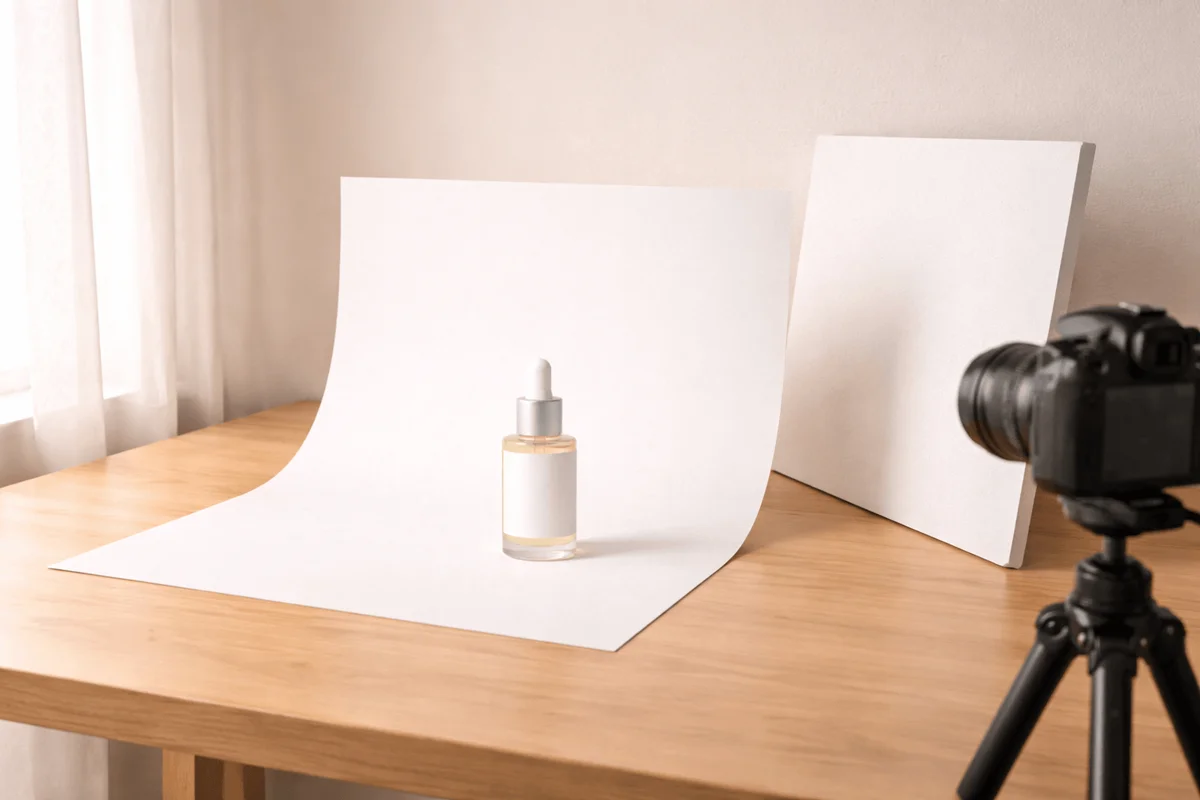
March 10, 2026
How to Build a DIY Product Photography Setup at Home
A home photography setup that produces consistent, catalog-quality images doesn't require expensive gear. It requires a repeatable system. Here's how to build one.
Read guide
March 6, 2026
The Best Product Photography Styles for Ecommerce (And When to Use Each)
Photography style is a conversion decision, not an aesthetic one. The same product photographed in four different styles will perform differently on every platform. Here's how to choose.
Read guide