The Best Product Photography Styles for Ecommerce (And When to Use Each)
Photography style is a conversion decision, not an aesthetic one. The same product photographed in four different styles will perform differently on every platform. Here's how to choose.

Photography style isn't a creative preference. It's a positioning signal. The same product photographed in four different ways communicates four different price points, four different audiences, and four different brand identities, before a buyer has read a single word.
Brands that choose a photography style based on what they like rather than what their buyers expect consistently underperform. The right style isn't the most beautiful one. It's the one that aligns with your buyer's expectations for what a product at your price point, in your category, should look like.
Here's what each major style communicates, when it performs best, and the mistakes that undermine each one.
Clean studio style
Studio photography, product on a white or neutral background, controlled lighting, no props, is the default for a reason. It communicates clarity, reliability, and professional presentation. It makes comparison easy and reduces cognitive load. On marketplaces where buyers are evaluating multiple options simultaneously, this is exactly what converts.
The weakness of studio style is emotional detachment. It tells buyers what the product is without telling them why it matters. For commoditized products in competitive categories, clarity is enough. For products where aspiration or identity plays a role in the purchase, studio-only catalogs leave significant conversion potential unrealized.
- Best for: marketplaces, bottom-of-funnel ads, tech, supplements, utility products
- Hero image role: always studio on marketplaces; often studio for DTC hero shots too
- Common mistake: treating studio style as sufficient across all channels and all catalog positions
💡 Pro tip
Studio photography is also the best source material for AI-generated lifestyle scenes. A well-lit product on a clean background gives AI the clearest product information to work with, which means your studio shot does double duty as both a listing image and the input for contextual scene generation.
Minimal lifestyle style
Minimal lifestyle places the product in a real environment, a shelf, a counter, a table, without adding props or styling that competes with it. The product is still the subject, but it has a home. This style builds context without sacrificing clarity.
It's the highest-performing style for most DTC brands in home, beauty, food, and wellness categories, because it answers the buyer's unconscious question (where would I use this?) without requiring imagination. The product looks like it already belongs somewhere, and that somewhere looks like the buyer's life.
This is also the style that AI-generated scenes reproduce most effectively. A product placed on a marble shelf, a wooden surface, or a kitchen counter with consistent, natural-looking light is exactly what generation systems are optimized to produce.
💡 Pro tip
The most common failure in minimal lifestyle photography is choosing a surface or environment that doesn't match the buyer's reference point. A budget candle on a luxury marble surface creates a mismatch that buyers feel, the setting is too aspirational for the price point. Match the environment to where your actual buyer lives, not where they wish they lived.
Editorial style
Editorial photography uses dramatic lighting, strong composition, and a high-contrast, often moody aesthetic to position the product as premium or luxury. It's designed to create desire and perceived value rather than communicate clarity.
Used correctly, editorial style is a pricing signal. A product photographed with editorial lighting and composition looks more expensive, which is valuable if the product is expensive and damaging if it isn't. Buyers who feel a product was oversold by its photography and underdelivered in person leave negative reviews that mention exactly that.
- Best for: luxury skincare, spirits and wine, premium watches, high-ticket fashion accessories
- Works well for: brand campaign imagery, hero images on premium DTC stores
- Common mistake: applying editorial lighting to mid-range products, the mismatch between visual premium and actual price creates buyer skepticism
Editorial style is the wrong default for most ecommerce brands, but it's the right choice for specific products and specific channels. Reserve it for your premium SKUs and brand-level campaign imagery, not your full catalog.
Flat lay style
Flat lay photography, product and props arranged on a surface and shot from directly above, performs well for categories where the product's relationship to complementary items matters: skincare routines, recipe ingredients, desk setups, travel accessories. The top-down angle also works well for products with interesting surface detail or pattern.
The risk with flat lays is composition complexity. Every element added to a flat lay is an element competing with the product. The most effective flat lays have a clear visual hierarchy: the product is obvious, the props support it, and nothing else is present. The moment a prop becomes as interesting as the product, the flat lay has stopped working.
💡 Pro tip
Flat lays perform significantly better on Pinterest and Instagram than on listing pages. Use them as social content and secondary listing images, not as hero shots. A buyer who can't immediately identify the product in a flat lay is a buyer who clicks away.
Matching style to platform and buying intent
No single style works optimally across all channels. The right approach is to understand what each platform demands and produce accordingly.
- Amazon and marketplaces: studio hero required, lifestyle in secondary slots drives conversion lift
- Shopify DTC: minimal lifestyle performs best as hero; studio for detail and clarity shots
- Instagram: editorial or minimal lifestyle; native-feeling images outperform obvious commercial photography
- Pinterest: flat lay or minimal lifestyle, vertically oriented, strong visual anchor
- Paid ads: test studio vs lifestyle by audience temperature; cold audiences typically respond better to lifestyle, warm audiences to studio with clear offer
The practical implication: a complete catalog requires multiple image types per product. That's expensive when every image requires a separate shoot. It becomes manageable when studio shots serve as source material for AI-generated lifestyle and contextual scenes, one source image producing multiple output styles without additional scheduling or cost.
Common questions about photography
Keep reading
March 10, 2026
How to Build a DIY Product Photography Setup at Home
A home photography setup that produces consistent, catalog-quality images doesn't require expensive gear. It requires a repeatable system. Here's how to build one.
Read guide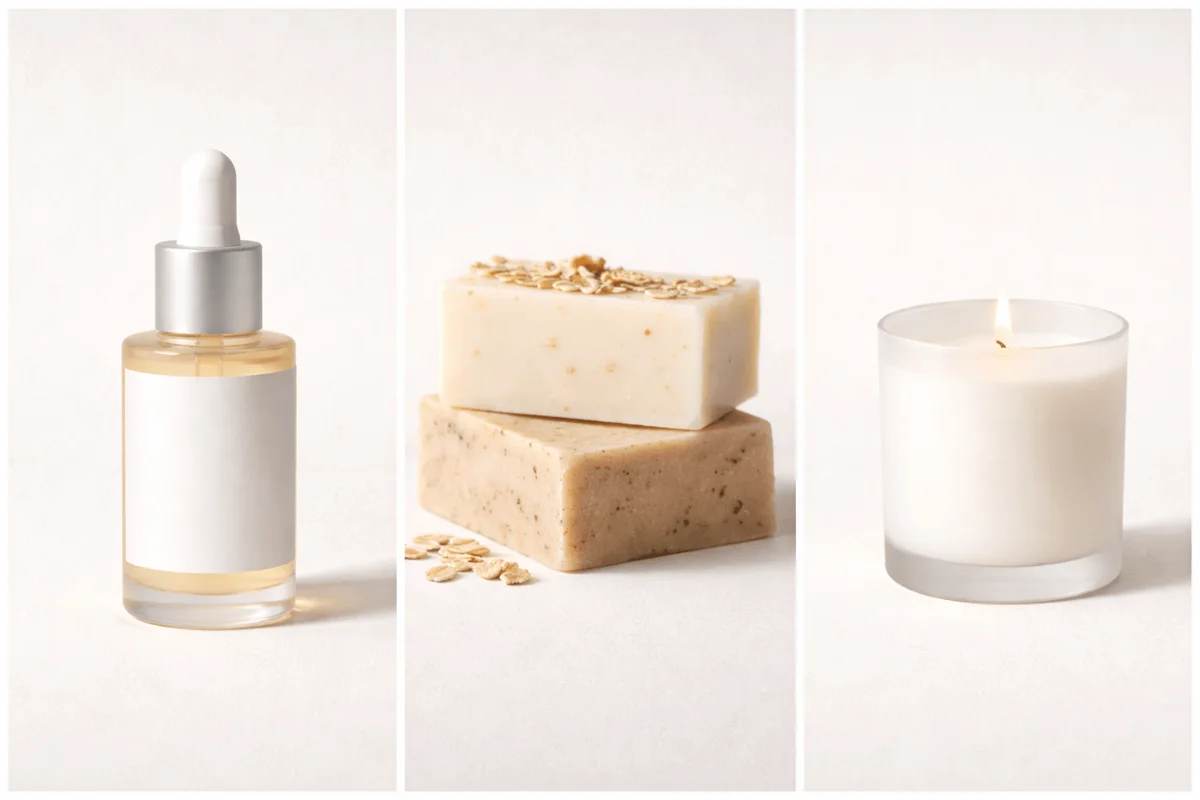
March 2, 2026
How to Create a Consistent Brand Look Across All Your Product Images
Inconsistent product images are one of the most common reasons a store doesn't feel like a brand. Here's how to build a visual system that scales without a studio budget.
Read guide